
Planner’s guide · Screens
LED wall or projection mapping?
Both fill an event with moving images, but they suit different rooms and ideas. This guide helps you choose before the content is made, when changing your mind is easiest.
Ask us a question All the guides
The short answer
Choose an LED wall when
- The room will be bright
- Presentations and camera pictures share the screen
- Performers will stand close in front of it
- You need the same picture from rehearsal to show
Choose projection mapping when
- The surface is part of the idea
- You can control the light
- There is room for projectors and a clear path for their light
- You want a building, a ceiling or an object to change
How they compare
| What to check | LED wall | Projection mapping |
|---|---|---|
| Light in the room | Makes its own light, so it stays clear in brighter rooms | Adds light to a surface, so other light on that surface weakens it |
| The surface | Panels built into a screen, in many shapes | The surface that is already there, or one built for it |
| Space and structure | Needs a safe structure for its weight, and access behind or above it | Needs positions for projectors and nothing blocking their light |
| Performers | Can stand close without casting shadows on the picture | Can block front projection and cast shadows, so positions must be planned |
| Cameras | Test on camera: fine pixel patterns can shimmer | Test on camera: the picture can look darker than it does to the eye |
| The content | Made to the wall’s exact pixels | Made to the surface’s measured shape |
| On site | Build, pixel map and colour checks | Projector alignment, usually in the dark, and checks after anything moves |
If you choose an LED wall
Ask the screen supplier for the pixel map: the exact width and height in pixels, and the position of every section. A picture made for a standard television shape will not fit a wide or divided wall.
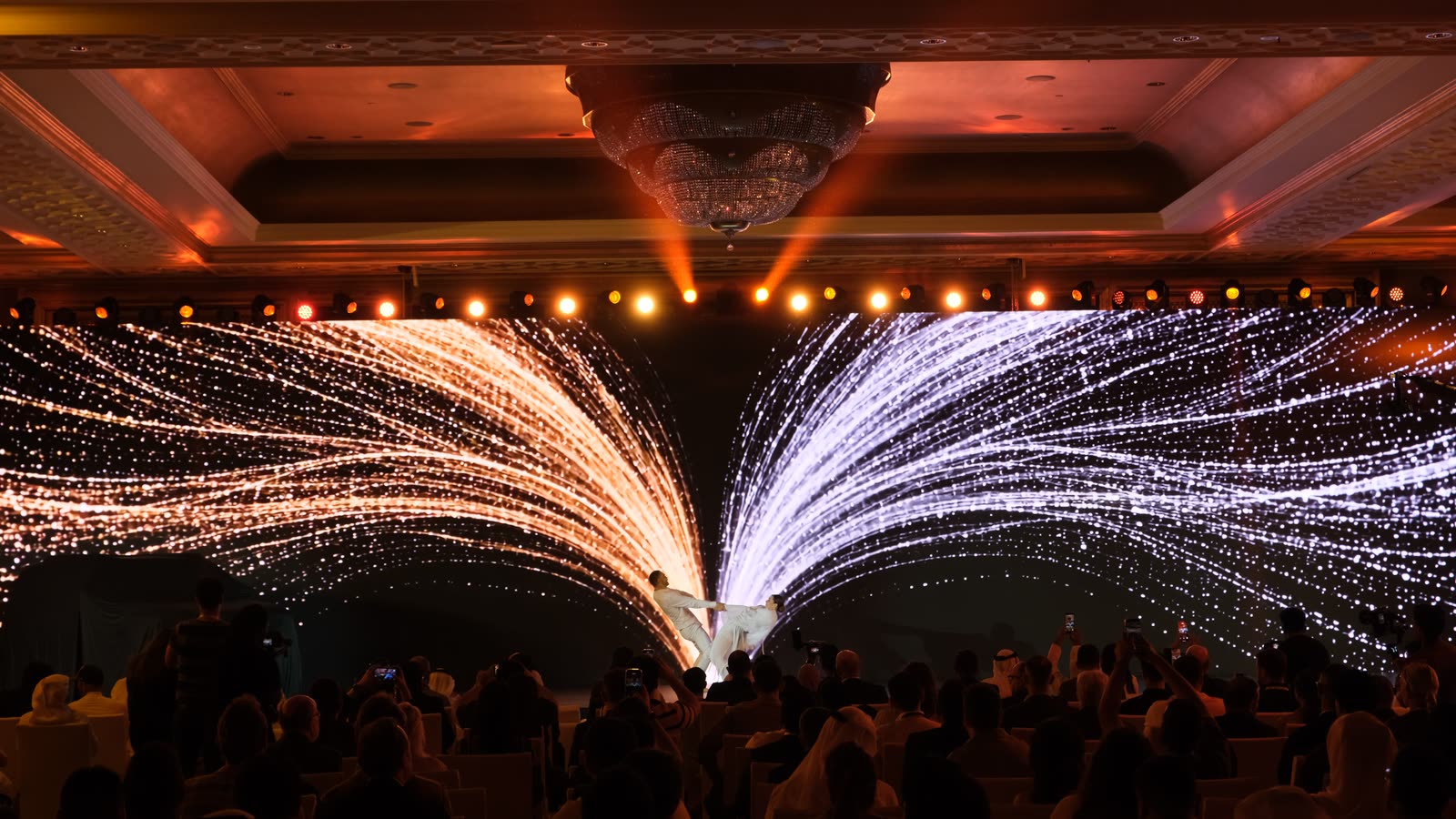
Put a performer in front of a test picture as well. A very bright background can turn people into silhouettes. Use that only if you want it. At the Freelander launch, the screen kept dark space around the performers so the light could move around them.
If you choose projection mapping
Measure the real surface, not only the drawings. Check its colour and texture, because dark, shiny and transparent materials are difficult to project on.
Visit at the hour of the event. Street lights, windows and exit signs that seem harmless at noon may fall across the picture at night.
When to use both
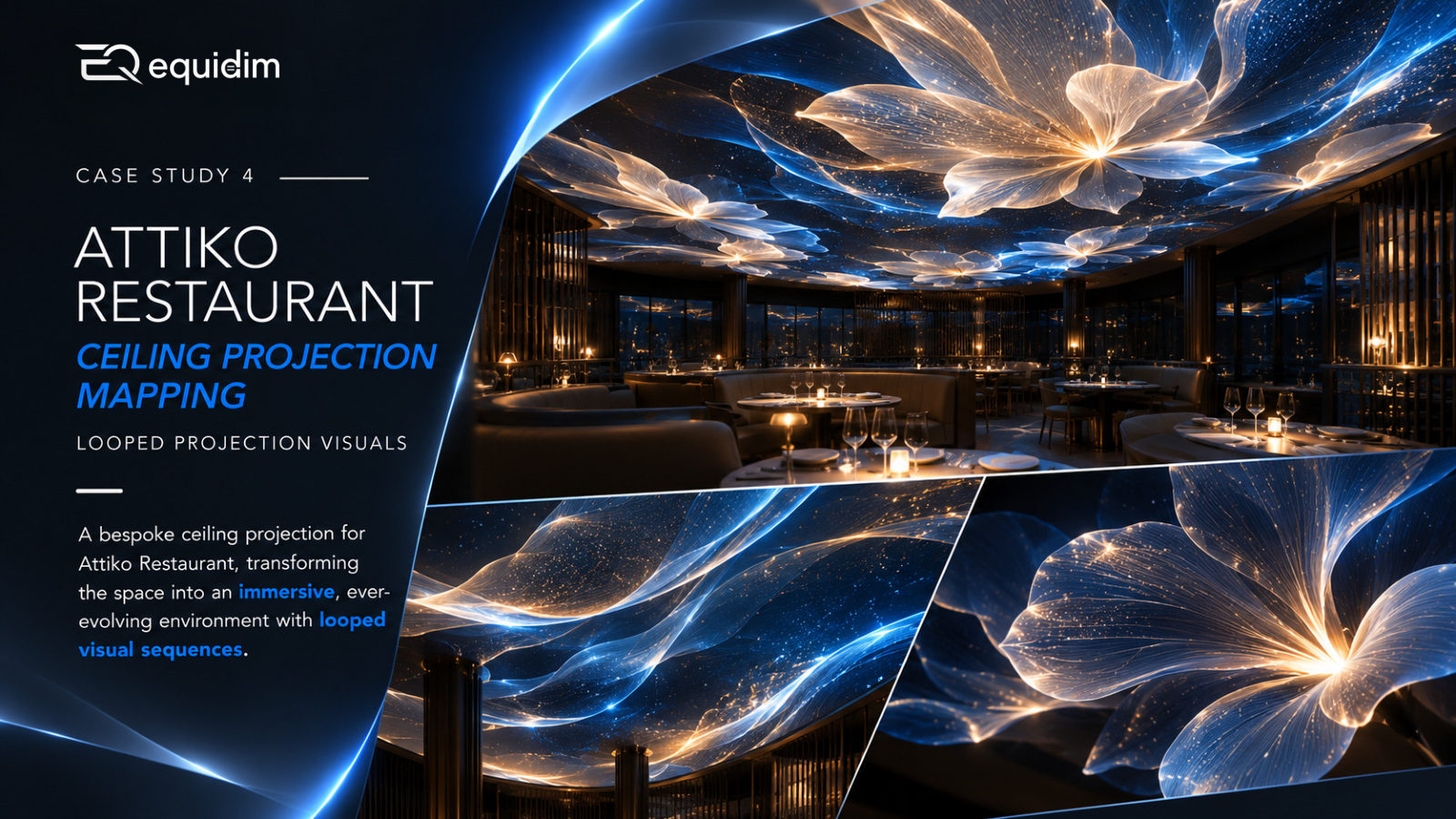
Use LED for information, close-ups and bright scenes. Use mapping to change the building, the set or the object around them. Give both one storyboard and one colour plan, or the event will feel like two separate shows.
Five questions to answer before content begins
How bright will the room be?
Include the lights that have to stay on.
What is the exact canvas?
Get a pixel map for LED, or a survey for projection.
Where will people stand?
Include the audience, performers, speakers and cameras.
When can we test it in the venue?
Agree the time before the schedule fills up.
Who runs it, and from which cues?
Name one person, and share one timeline.