

Planner’s guide · Budgets
What affects the cost of a live show?
There is no useful single price for a custom show. Two ten-minute shows can need completely different teams. This guide explains what changes a budget and how to ask for quotes you can compare fairly.
Ask us a question All the guides
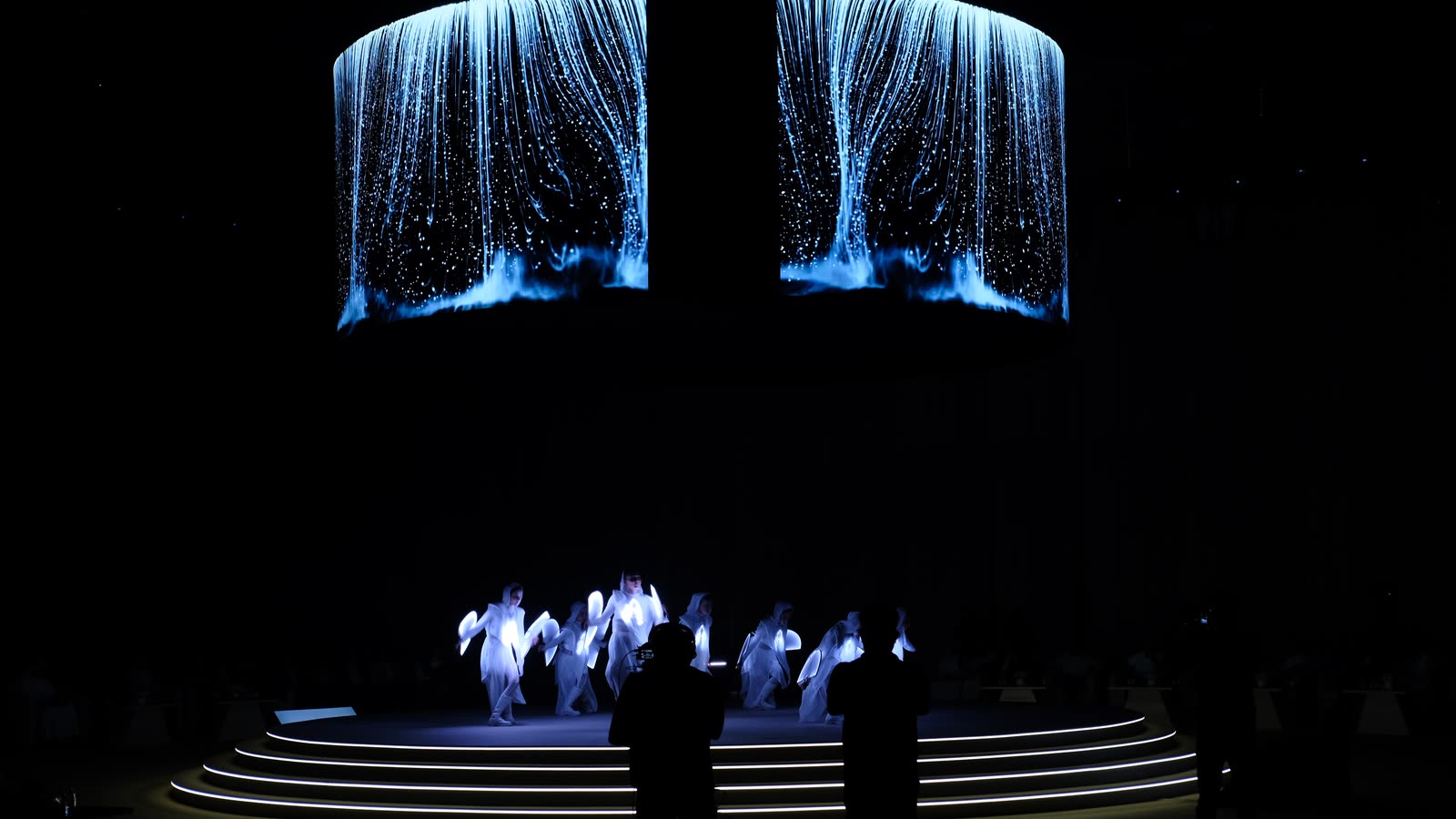
What changes the budget most
| Part | What changes it | Decide early |
|---|---|---|
| The idea | An existing show, an adapted one or one made from nothing | What has to be unique to your event |
| Cast | Number, specialist skills, rehearsal days, travel and stay | The size of the stage and what the cast has to fill |
| Costumes and props | Existing, adapted or new; LED programming; spares | Which ones the audience will see up close |
| Music | Licensed or original, voiceover, recording and where it will be used | Whether it will be published online as well |
| Screen content | Length, size of the canvas, style and number of changes | The final pixel map and who approves it |
| Technical production | Stage, sound, light, screens, scenery, power and crew | What the venue or your supplier already provides |
| Special effects | Drones, fireworks, fire, smoke and flying, with specialists, safety and permits | Whether the story needs them, and whether the venue allows them |
| Time | Days to create and rehearse, time in the venue and working hours | The date when everything must be approved |
Where to spend less without weakening the show
- Choose one strong moment. One reveal that is fully made can do more than several half-finished ideas.
- Make the show shorter. A shorter show can be more memorable, and it gives each minute more rehearsal time.
- Share what is already there. Plan around the stage, screens and lights already booked for the event.
- Decide before you build. A change on a storyboard is easier than one in a finished costume or film.
- Use the work again. Plan early if the film will also be a teaser or social content, so its shapes and rights are covered.
Where cutting costs can be risky
- Safety, licensed specialists, permits and insurance
- Time in the venue with the real equipment
- One experienced person calling the show
- Spare costumes, props and playback
- Music and picture rights for every place you will use them
How to compare quotes fairly
Send everyone the same brief, then ask each team to show what is included, what isn’t and what they have assumed.
- The number of performers, rehearsal days and time in the venue
- What is made new and what already exists
- Who provides the stage, sound, light, screens, power and crew
- How many rounds of changes are included, and what happens after that
- Travel, stay, visas, permits, insurance and taxes
- Who owns or may use the music, films, costumes and design
- Payment dates, and the terms for postponing or cancelling
If one quote is much lower, check which of these points is missing before you compare the totals.
What to send for a first budget
- The occasion, and what the show has to achieve
- The date, the city and the venue, or the kinds of venue you are considering
- The number of guests and the size of the stage
- How long the show should be, as a range
- The technical equipment already booked
- A budget range, if you can share one. It helps us suggest an idea that fits.
You can send these on WhatsApp or with the form below.